
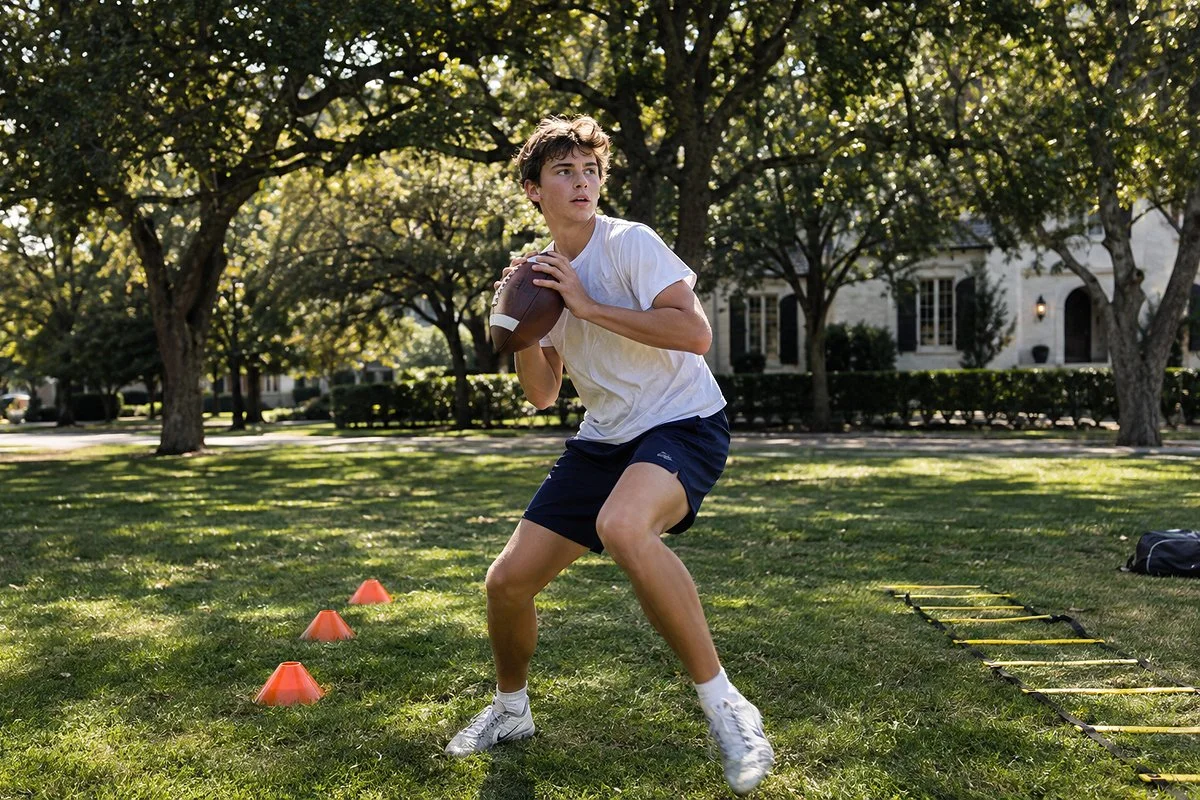
When the fall season ends, it's tempting to put the football in the closet until August. We get it. Everyone needs a break. But the quarterbacks who improve the most from one season to the next almost always have one thing in common: they kept working when nobody was keeping score.
Why the Off-Season Matters
During the season, there's no time to rebuild anything. Practices are about game plans, and game day comes fast. A quarterback with a hitch in his throwing motion or sloppy footwork in his drop usually just has to play through it.
The off-season is different. It's the time to slow down, fix habits, and add new skills without a game to get ready for that week. Small changes like a cleaner release, quicker eyes, or a more balanced base take hundreds of reps to stick, and there's no better time to get those reps than now.
Start With Rest
A good off-season plan actually starts with a break. A few weeks away from throwing gives the arm and body time to recover, and kids come back eager to play. After that, the goal is steady, consistent work, not cramming.
What It Looks Like by Age
Grades 3–5: Keep it fun. Focus on grip, basic throwing mechanics, and simple footwork. Playing other sports is a big plus at this age.
Grades 6–8: Build the foundation. Clean up the dropback, work on accuracy, and start learning how defenses line up, such as reading the safeties.
Grades 9–12: Sharpen the details. Timing with receivers, working through progressions, moving in the pocket, and getting stronger in the weight room all come into play.
Consistency Wins
We say it all the time: the best results come from consistency. One session a week all winter and spring will do more than a few sessions crammed into July. The quarterbacks who show up in March are usually the ones running the offense in September.
If you'd like to talk through an off-season plan for your athlete, reach out anytime. We'd love to help make next fall their best season yet.
Visit Our Homepage: QBUnion.com
Book QB Training Today: Click Here
